Cranberry Township Orthodontics: Your Complete Guide to Braces, Invisalign, and Care for Every Age
Orthodontics in Cranberry Township: What to Know Before You Start
Cranberry Township orthodontics is the diagnosis and correction of crooked teeth and misaligned bites using braces, Invisalign clear aligners, and growth-guiding appliances for children, teens, and adults. At Rhoads Orthodontics, care begins with a free consult, a digital scan, and a personalized treatment plan built around your goals.
Orthodontics is a type of dental care that helps straighten teeth and fix problems with the bite. Left alone, misaligned teeth can lead to tooth decay, gum disease, uneven wear on tooth surfaces, and difficulty chewing.
Dr. Stephanie Rhoads is a board-certified orthodontist, which means she completed additional specialty training beyond dental school and voluntarily passed board examination. As an orthodontic specialist, she treats children, teens, and adults under one roof. She's also been recognized with the Pittsburgh Top Dentist award.
What we treat
- Crowding when teeth overlap or twist because there isn't enough room
- Spacing or gaps between teeth
- Overbite where upper front teeth extend too far past the lower
- Underbite where lower teeth sit ahead of the uppers
- Crossbite where upper and lower teeth don't meet correctly
- Open bite where the front teeth don't touch when the back teeth close
How long treatment usually takes
Most treatment at our Cranberry Township office runs somewhere between 6 and 30 months. Simple alignment cases finish faster. Bite corrections, jaw growth guidance, and complex crowding take longer.
Your timeline depends on three things: how much movement your teeth need, which appliance you choose, and how consistently you follow the plan. Dr. Rhoads walks through all of it at your first visit.
Everything begins with a free consult
There's no charge and no obligation. You can come into our office on Graham Park Drive for an exam and digital imaging, or start with a virtual consult by submitting photos from home. Either way, you'll leave knowing your options and your timeline.
Families from Cranberry Township, Wexford, and across Butler County start right here. Our family can't wait to meet yours.
Invisalign Clear Aligners: Nearly Invisible Treatment for Teens and Adults
Invisalign clear aligners are custom-made, removable plastic trays that shift teeth gradually. You wear each set for one to two weeks, then move to the next in the series. Because the trays are clear and fit closely over your teeth, most people won't notice you're in treatment at all.
These comfortable, clear removable aligners can straighten your teeth without anyone knowing. That's the appeal for adults in meetings all day and teens who'd rather not announce their treatment to the whole school.
Removable means easier daily life
You take the aligners out to eat, brush, and floss. No brackets to work around with your toothbrush. No wire to thread floss under.
But removable also means responsible. Aligners work when you wear them 20 to 22 hours a day. Take them out for meals and cleaning, then put them right back in.
You don't have to stop eating any of your favorite foods while you're working on a straighter smile.
Who does well with Invisalign
Dr. Rhoads recommends Invisalign clear aligners most often for:
- Mild to moderate crowding
- Spacing and gaps
- Relapse after previous braces (teeth that shifted over the years)
- Adults who need a discreet option for work or social reasons
- Teens who are organized and motivated
Believe it or not, tooth movement doesn't stop in adolescence. Teeth that seemed straight in your twenties can shift later in life.
Digital scanning, not putty
We use an iTero digital scanner to capture your teeth in 3D. No more goopy, gaggy impressions. The scan takes a few minutes, and it lets us show you a projected simulation of your finished smile before you commit to anything.
Invisalign handles more than simple cases
Small tooth-colored attachments bonded to certain teeth give the aligners something to grip, which allows for rotations and more difficult movements. Elastics can be added to correct bite relationships. That combination extends Invisalign into cases that once required fixed appliances.
For a closer look at wear schedules, tray changes, and what daily life with trays actually feels like, visit our full Invisalign clear aligners page.
Retainers hold your result
Every finished case needs retention. Teeth have memory, and without a retainer they drift back toward where they started. Dr. Rhoads will fit you with retainers and explain exactly how long to wear them each day.
Self-Ligating Metal and Clear Braces: Fewer Visits, Gentler Forces
What are self-ligating braces?
Self-ligating braces use a built-in sliding clip on each bracket to hold the archwire, instead of the small elastic ties used on traditional braces. Less friction between wire and bracket allows teeth to move with lighter forces. For many families, that also means shorter visits and fewer trips to our Cranberry Township office.
Self-ligating braces can give you a beautiful smile much quicker than traditional braces. It's also more comfortable.
Why the clip matters
Your teeth can move freely without the added pressure of ties holding the archwires in place. Traditional elastic ties create drag. They also stretch and discolor between visits.
Removing them changes a few things at once:
- Lower friction allows gentler, more efficient tooth movement
- Fewer adjustment visits because the wire works longer between changes
- No elastics means no staining or trapped bacteria
- Shorter chair time since there's nothing to tie and untie
- Easier hygiene with fewer spots for plaque to hide
Rhodium brackets
Dr. Rhoads offers self-ligating Rhodium brackets that look great and move your teeth more efficiently than traditional braces. Rhodium is a bright, silvery finish that resists discoloration and blends better against enamel than older stainless brackets. They're durable enough to withstand an active lifestyle, which matters for the hockey players and soccer kids we see from Cranberry Township, Wexford, and all over Butler County.
Metal self-ligating braces handle the widest range of cases of any appliance we offer.
Clear braces
Clear braces blend with the color of your teeth, giving you a treatment people may never notice. You get the full control of a fixed appliance with far less visibility. Adults who need bite correction but don't want metal across their front teeth often land here.
Who fixed appliances suit best
- Complex bite corrections that need constant, controlled force
- Growing children and teens where jaw development is part of the plan
- Anyone who'd rather not manage removable trays
- Cases involving significant rotations or impacted teeth
Braces stay in. Nothing to lose, nothing to remember. Our metal braces page covers bracket choices, wire changes, and care between visits in more detail.
Orthodontics for All Ages: Children, Teens, and Adults
We believe that everyone deserves a beautiful smile: children, teens and adults. What changes across those groups is timing, biology, and what treatment can accomplish.
Children: start with an evaluation by age 7
The American Association of Orthodontists recommends a first orthodontic evaluation by age 7. By then, enough permanent teeth have come in for Dr. Rhoads to spot developing crossbites, crowding, and jaw growth concerns.
An early evaluation doesn't always mean early treatment. Often it means monitoring. Catching a growth issue at this stage gives Dr. Rhoads the option to guide development rather than react to a finished result years later. If your child is nearing age seven, this is the ideal time to schedule an orthodontic evaluation at our Cranberry Township office.
Phase 1 (roughly ages 7 to 10) guides jaw growth, creates room for erupting teeth, and corrects habits or crossbites while the bones are still flexible.
Phase 2 comes later, once the permanent teeth are in, and aligns everything into its final position.
Teens: the efficient window
Teenagers are still growing, and that growth is a tool. Jaw development can be steered rather than fought. Both self-ligating braces and Invisalign Teen work well here, and the choice usually comes down to bite complexity and how reliably a teen will wear aligners. We see teens from Cranberry Township, Wexford, and neighboring Butler County schools throughout the year.
Adults: no age limit
Roughly one in four orthodontic patients today is an adult. Healthy teeth can be moved at any age. Many orthodontic concerns can be corrected as easily for adults as for children, because orthodontic forces move teeth the same way regardless of birthday.
Adult treatment does involve a few extra considerations:
- Existing crowns, bridges, implants, or fillings
- Gum and bone health, which must be stable before movement begins
- Coordination with your general dentist
- Prior orthodontic treatment and any relapse
| Age Group | Typical Focus | Common Options | Growth a Factor? |
|---|---|---|---|
| Ages 7-10 | Guide jaw growth, create space | Expanders, partial braces | Yes |
| Ages 11-17 | Full alignment and bite correction | Self-ligating braces, Invisalign Teen | Yes |
| Adults | Alignment, bite, relapse correction | Invisalign, clear braces, Rhodium brackets | No |
You can do almost anything during orthodontic treatment: sing, play a musical instrument, dine out, kiss, and even have your picture taken. Some adjustments may be necessary, but if you're like the vast majority of adult patients, you'll adjust quickly.
Palatal Expanders and Early Interceptive Treatment
Dr. Rhoads uses a palatal expander, a fixed appliance that gradually widens the upper jaw to create room for crowded teeth and correct crossbites. It works by applying steady outward pressure across the palatal suture, the growth seam running down the roof of the mouth. Because that seam fuses with age, expanders work best in childhood.
Timing matters
Expansion is most effective before the palatal suture fuses, typically in late childhood or very early adolescence. After fusion, widening the upper jaw becomes far more involved. That's a big part of why the age-7 evaluation exists.
Signs your child may need one
- A crossbite, where upper back teeth sit inside the lower teeth
- Severe crowding with no room for permanent teeth
- Habitual mouth breathing
- A narrow smile that shows dark spaces at the corners
- A jaw that shifts to one side when biting down
What the process looks like
Active expansion usually takes a few weeks. You'll turn a small key at home on a schedule Dr. Rhoads gives you. The appliance then stays in place for several more months while new bone fills in and stabilizes the new width.
Kids adapt quickly. Speech and eating feel odd for a few days, then normalize.
Why early treatment can save trouble later
Creating room while a child is still growing can reduce the need for permanent tooth extractions later. In some cases it lowers the odds of jaw surgery in adulthood. Guiding growth is almost always easier than correcting a finished result, which is why our palatal expanders guide walks parents through Phase 1 appliances step by step.
Laser Treatment, Free Consultations, and What Your First Visit Looks Like
Laser treatment for gummy smiles uses a soft-tissue laser to reshape excess gum tissue, revealing more of each tooth and evening out the gumline. Some smiles need more than tooth movement. Gum tissue shape affects how much tooth shows, how even the smile line looks, and how easy teeth are to keep clean.
Soft-tissue laser treatment for gummy smiles
Dr. Rhoads performs this reshaping herself as part of finishing a case. Laser treatment for gummy smiles can even out an uneven gumline, expose more of a tooth that's slow to erupt, and improve symmetry once braces come off. You'll find before-and-after examples on our laser treatment for gummy smiles page.
Laser work is typically quick and precise, and tissue tends to heal faster than with older cutting methods. Most visits take minutes, not hours.
Your free consult
This first visit is genuinely free, and nothing is expected of you afterward. Here's what happens:
- Records. Digital scan with the iTero scanner plus photos and digital imaging. No goopy impressions.
- Exam and diagnosis. Dr. Rhoads evaluates tooth position, bite relationship, jaw growth, and gum health.
- Options review. She explains which appliances would work for your case, and why.
- Timeline. A realistic estimate of how long treatment should take.
- Written personalized treatment plan. You leave with it in hand.
Virtual consult option
Can't get to our Cranberry Township office right away? Submit photos from your phone and get Dr. Rhoads' initial guidance without leaving home. It's a practical first step for busy families and for anyone still deciding whether to move forward.
Want to see the space first? Office tours are available. A great smile is a team effort, and it helps to meet the team.
Invisalign vs. Clear Braces vs. Metal Braces: How to Choose
Invisalign clear aligners offer the most discretion and the easiest hygiene, but results depend on wearing them 20 to 22 hours daily. Clear self-ligating braces give fixed-appliance control with a low-visibility look. Metal self-ligating Rhodium brackets handle the widest range of complex bites.
| Invisalign Clear Aligners | Clear Braces | Metal Self-Ligating Braces | |
|---|---|---|---|
| Visibility | Nearly invisible | Blends with enamel | Visible but sleek |
| Removable | Yes | No | No |
| Case complexity | Mild to moderate, more with attachments | Wide range | Widest range |
| Daily hygiene | Easiest (brush normally) | Moderate | Moderate |
| Typical timeline | 6-24 months | 12-30 months | 12-30 months |
| Compliance needed | High | Low | Low |
Reading the table
Compliance is the deciding factor more often than anything else. Aligners sitting in a case do nothing. If you know you'll wear them, Invisalign is excellent. If you'd rather not think about it, braces work while you sleep, eat, and forget they're there.
Bite complexity narrows things too. Significant rotations, impacted teeth, and major bite corrections generally favor fixed appliances.
Many options are available today to minimize the appearance of braces. Today's braces are smaller and sleeker, and some are next-to-invisible. Dr. Rhoads can advise you as to what options are recommended for your particular needs.
Frequently Asked Questions About Orthodontics in Cranberry Township
How long does orthodontic treatment take?
Most cases run 6 to 30 months. Minor alignment or relapse correction can finish in under a year, while full bite corrections and two-phase growth guidance take longer. Dr. Rhoads gives you a specific estimate after reviewing your digital scan and records.
Does getting braces or aligners feel sore?
Placing braces is straightforward and requires no numbing at all. Teeth often feel tender or sore for a few days after placement and after adjustments, and aligners feel snug when you switch to a new set. Over-the-counter relief and soft foods handle that tenderness easily. Self-ligating brackets use lighter forces, which many patients find more comfortable than traditional braces.
How often are appointments, and what if I have an emergency?
Most patients visit every 4 to 8 weeks, and self-ligating braces often allow longer stretches between visits. Aligner patients sometimes need even fewer check-ins. If a bracket comes loose or a wire irritates your cheek, call our Cranberry Township office at 724-742-2300 and we'll get you in quickly. True orthodontic emergencies are rare.
Am I too old for braces or Invisalign?
No. Healthy teeth can be moved at any age, and about one in four orthodontic patients is now an adult. Many orthodontic concerns can be corrected as easily for adults as for children, because orthodontic forces move teeth in the same way for both. Adults do need stable gum and bone health first, which Dr. Rhoads evaluates at your free consult alongside any existing crowns, bridges, or implants.
Do I have to wear a retainer forever?
Some form of retention is lifelong, but the schedule eases up. Most patients wear retainers full-time briefly, then shift to nights only, and eventually to a few nights a week. Teeth keep shifting throughout life, so a retainer protects the investment you made in your smile.
Orthodontic Resources and Next Steps for Cranberry Township Families
Daily care checklist
- Brush after every meal, and after removing aligners
- Use fluoride toothpaste and a soft-bristle brush in good condition
- Replace it as soon as it shows wear; braces wear brushes out fast
- Floss daily with a threader or interdental brush
- Rinse aligners with cool water before reinserting
- Keep aligners in their case, never in a napkin
Foods to avoid with fixed appliances
Hard candy, ice, nuts, popcorn kernels, hard taco shells, and sticky caramel or taffy can break brackets. Cut apples, carrots, and corn off the cob into smaller pieces instead of biting straight in.
Retainer care
Rinse after each wear, clean with cool water and mild soap, and store in the case. Heat warps retainers, so keep them away from dishwashers, car dashboards, and hot water. Lost or damaged retainers should be replaced quickly before teeth start to move.
The American Association of Orthodontists and the American Dental Association both publish helpful patient education resources.
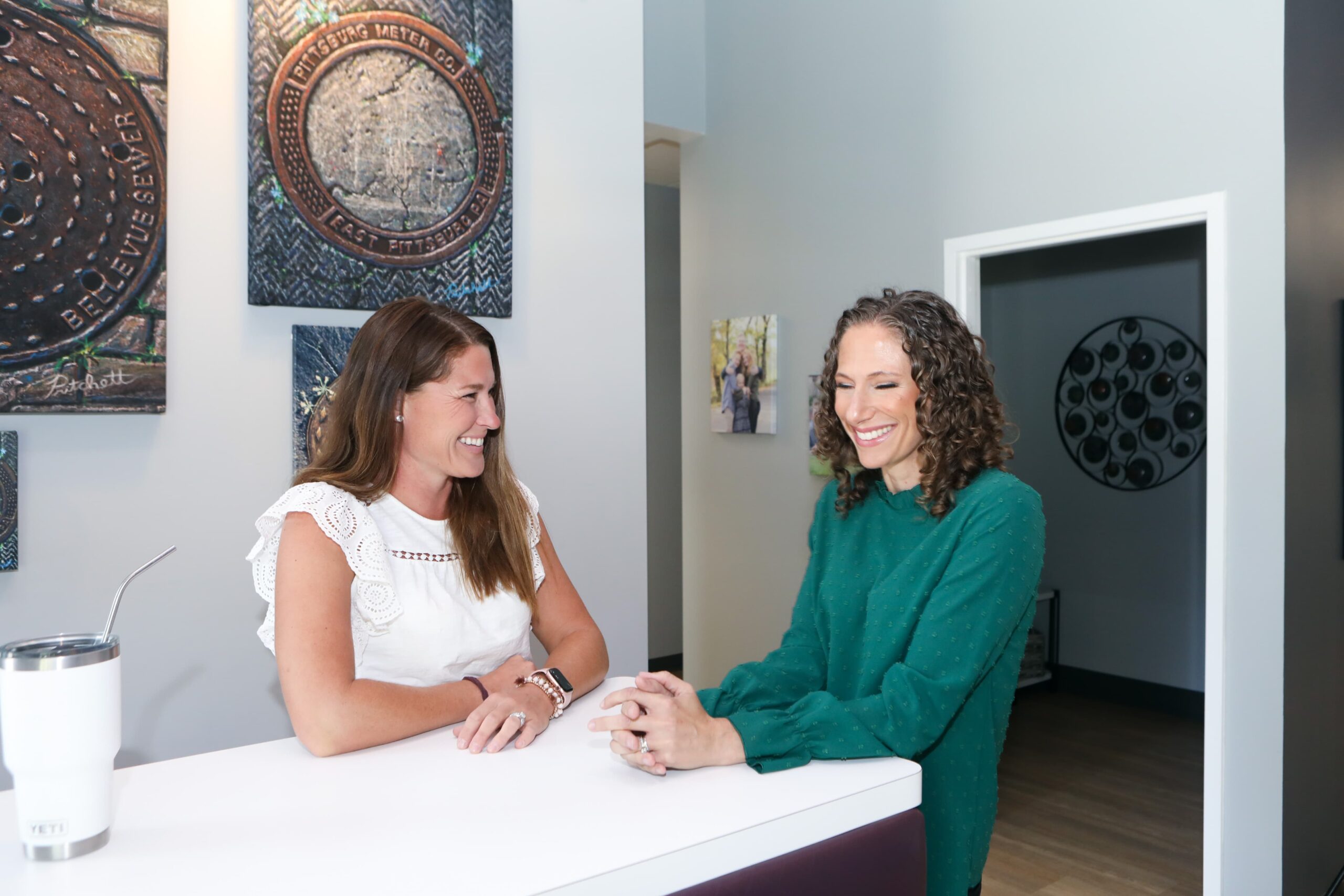
Schedule Your Free Consultation at Rhoads Orthodontics
Every smile tells a story. We'd like to hear yours.
Your free consult is exactly that: free, with nothing owed if you decide to wait. Visit our Cranberry Township office for a full exam, digital scan, and written personalized treatment plan, or start with a virtual consult and send photos from your phone.
Families across Cranberry Township, Wexford, and the surrounding Butler County communities trust Dr. Stephanie Rhoads, a board-certified orthodontist and Pittsburgh Top Dentist honoree, with their smiles.
Call 724-742-2300 or request your visit online. Become part of the family.
Rhoads Orthodontics
132 Graham Park Dr., #300
Cranberry Twp., PA 16066
724-742-2300