
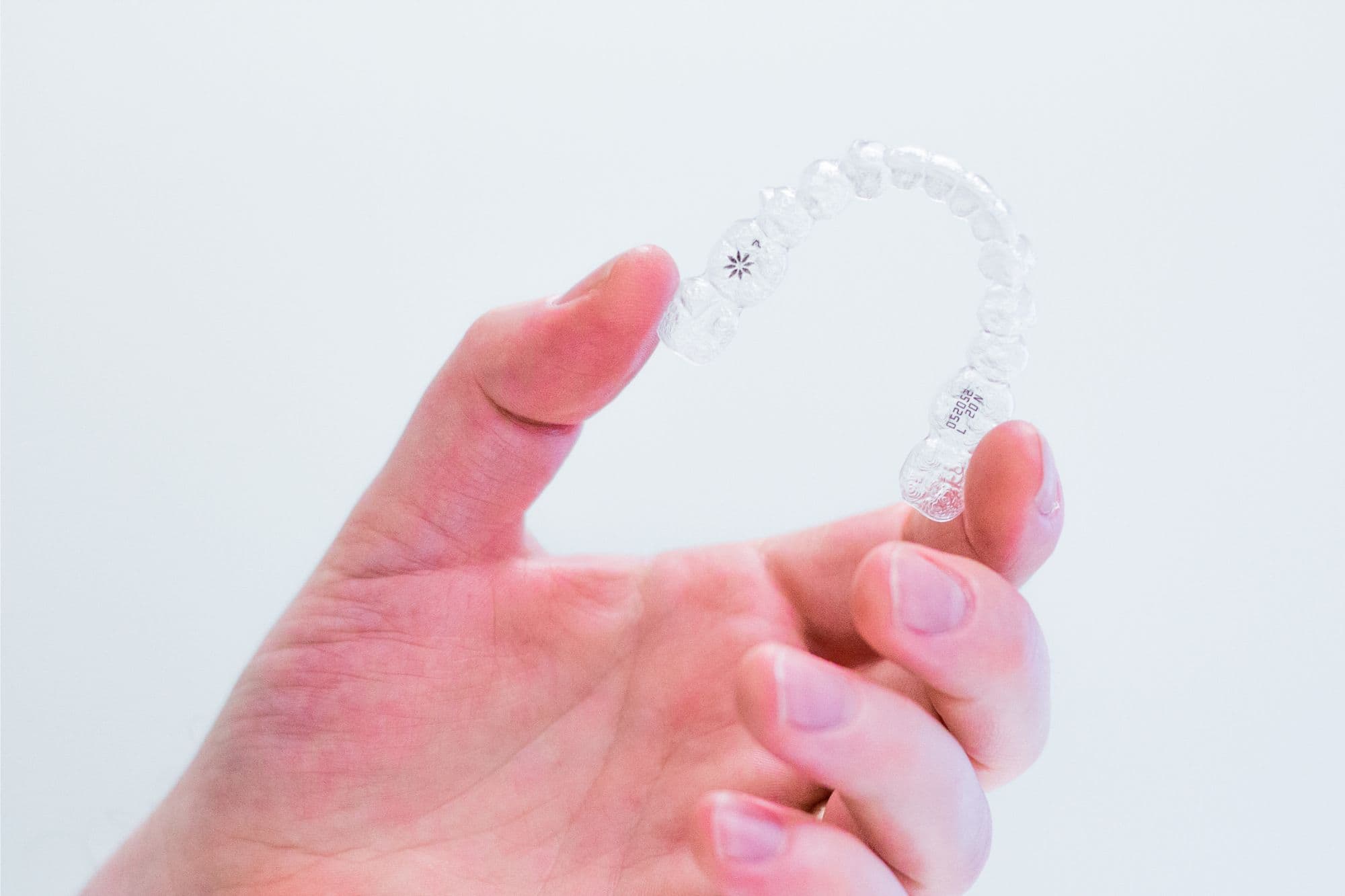
Clear aligners have come a long way, and not every tray is made the same. What makes Rhoads Orthodontics’ in-house 3D aligners different is simple: they’re designed, printed, and finished right here rather than mailed off to an outside lab. Dr. Stephanie Rhoads, a board-certified orthodontist, plans every tooth movement herself. Here’s how the process works, who it fits, and how it compares to other options.
What Are In-House 3D Printed Clear Aligners?
In-house 3D printed clear aligners are aligner trays designed, printed, and finished right at the orthodontic office instead of an outside lab. A digital scan creates the working model, the orthodontic specialist plans each tooth movement, and 3D printing plus thermoforming produces the full tray series. Every step stays under one roof.
Think of it as the same clear aligner concept you already know, with a shorter supply line.
Here are the terms you’ll hear during your first visit:
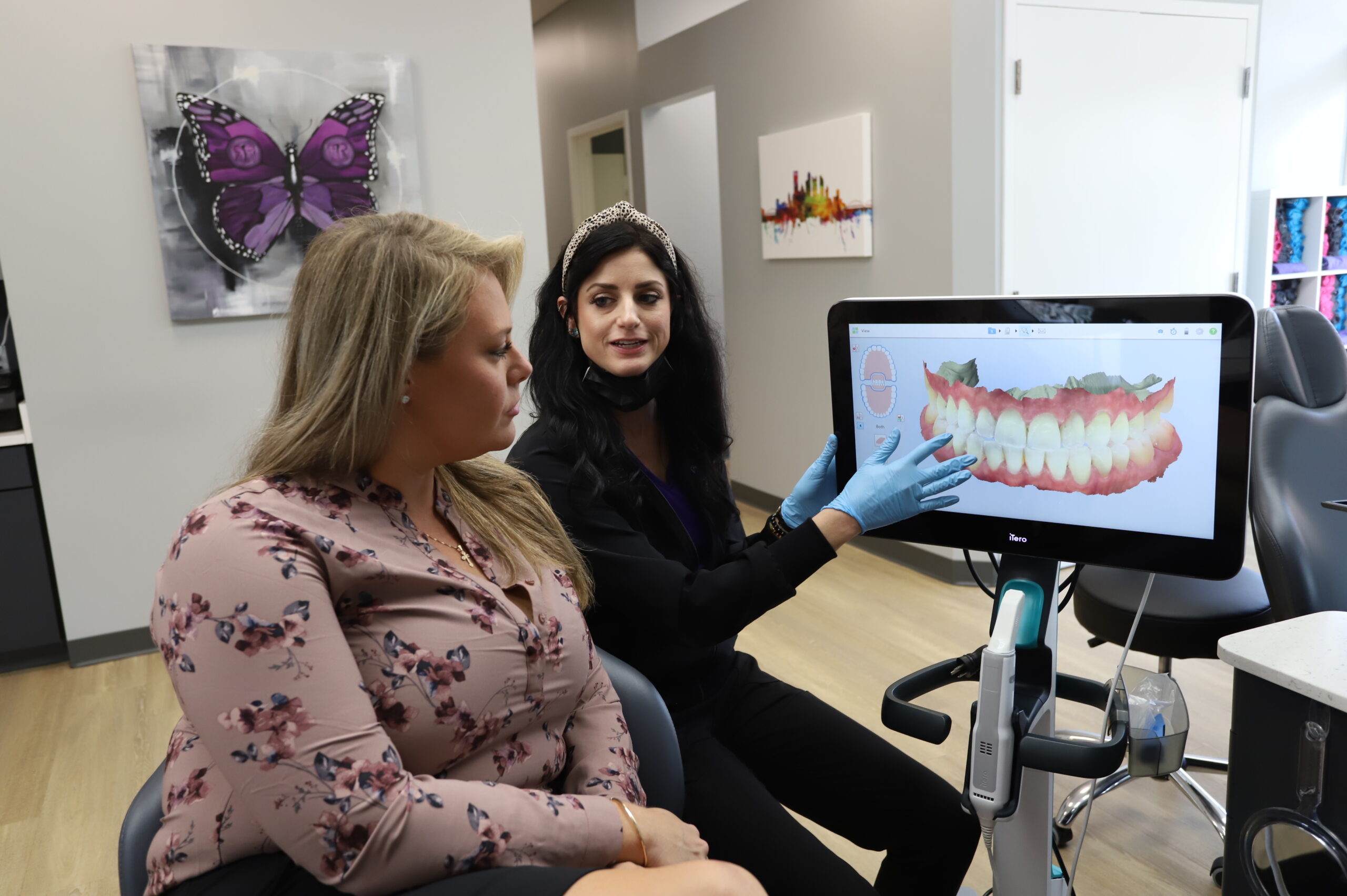
- Intraoral scanner: A small handheld wand that captures a 3D digital scan of your teeth and bite. No more goopy, gaggy impressions.
- Personalized treatment plan: The digital blueprint showing how each tooth moves, in what order, and over how many weeks.
- Aligner tray series: The set of clear trays you wear in sequence, each one shaped slightly differently to keep teeth moving.
- Attachments: Tiny tooth-colored bumps bonded to certain teeth so trays can grip and rotate them properly.
Does In-House Mean Do-It-Yourself?
This is worth clearing up. In-house production means the printing and forming happen on site, not that the planning happens without a specialist.
Dr. Rhoads directs every stage. She reviews your scan, designs the movements, checks the printed models, approves the trays, and sees you in person for progress checks. Orthodontic specialists complete additional years of training after dental school, according to the American Association of Orthodontists, and that training is what turns a digital file into a safe, predictable result.
Do You Still Have Other Treatment Options?
Rhoads Orthodontics also offers Invisalign clear aligners, self-ligating braces with Rhodium brackets, and clear braces.
That matters. Some cases fit in-house trays beautifully. Others do better with a lab system or with brackets and wires. Because our practice isn’t locked into one product, the recommendation you get is based on your teeth rather than on what’s available.
How the In-House Aligner Process Works, Step by Step
The in-house aligner process runs in six stages: a free consult, a digital 3D scan, an orthodontist-designed movement plan, on-site printing and tray forming, delivery with wear instructions, and regular progress checks. Work that normally requires lab shipping happens inside our office instead.
Step 1: What Happens During Your Free Consult?
You start with an exam and a conversation. Dr. Rhoads looks at crowding, spacing, bite, gum health, and your goals, then tells you honestly whether aligners are the right tool. The consult is free, so you can get a real recommendation and a real estimate before committing to anything. A virtual consult option is available if getting in during work hours is tough for your busy family.
Step 2: What Does the Digital Scan Involve?
A handheld scanner captures your teeth in 3D in a few minutes. No trays of putty, no gagging, no re-dos.
That scan becomes the working model for everything that follows. It’s also a helpful visual, because you can see your own bite on screen while Dr. Rhoads explains what needs to change.
Step 3: How Are Tooth Movements Mapped and Staged?
This is the part that separates a good result from a mediocre one. Dr. Rhoads maps which teeth move, how far, in what sequence, and how many trays it will take.
She also decides where attachments go and whether any interproximal reduction is needed to create space. Nothing gets handed off to a technician to sketch first.
Step 4: How Are Trays Printed and Formed On Site?
Once the plan is approved, models are 3D printed in the office. Thermoformed material is pressed over each model, then trimmed and polished so the edges sit comfortably against your gums.
Step 5: What Happens at Tray Delivery?
You come in, we place attachments if your plan calls for them, and you try on your first set. We check the fit, show you how to seat and remove trays, and go over the schedule.
Plan on 20 to 22 hours of wear per day. Take them out to eat, drink anything other than water, brush, and floss. You don’t have to give up your favorite foods.
Step 6: How Do Progress Checks, Refinements, and Retainers Work?
You’ll come in every few weeks so we can confirm teeth are tracking with the plan. If something isn’t moving as predicted, refinement trays can be made here.
At the finish line, retainers hold everything in place. Straight teeth stay straight because you wear your retainer, not because treatment ended.
Benefits of Keeping Aligner Production In-House
Keeping aligner production in-house speeds up replacements and refinements, gives Dr. Rhoads direct control over every movement, and simplifies scheduling for your family. Removing the lab from the middle of the process changes the day-to-day experience in ways you can feel.
- Faster turnaround on replacements and refinements. When a tray needs to be remade, production starts here instead of waiting on shipping in both directions.
- Direct doctor control over every movement. Dr. Rhoads designs the sequence herself rather than editing a technician’s first draft.
- Quicker mid-treatment corrections. Teeth don’t always cooperate exactly as predicted. When that happens, the plan can be adjusted and new trays produced without restarting an outside order.
- Lost or cracked trays are less of a setback. A replacement can often be reprinted from your existing digital file.
- Fewer moving parts in scheduling. Less dependence on outside shipping means visit timing is easier to predict around school, work, and sports.
There’s a bigger-picture benefit too. When the person who designed your plan is the same person checking your teeth every few weeks, small course corrections happen early instead of at the end.
That’s the whole idea behind treating in-house. A great smile is a team effort, and a shorter chain of hands makes that team tighter.
In-House 3D Aligners vs. Invisalign vs. Mail-Order Aligners
All three straighten teeth with clear trays. What differs is who plans the movements, how fast changes can be made, and how much supervision you get along the way.
| In-House 3D Aligners | Invisalign Clear Aligners | Mail-Order Aligners | |
|---|---|---|---|
| Who plans movements | Dr. Rhoads, start to finish | Doctor-directed using Invisalign’s digital system | Remote review, no in-person exam |
| Turnaround on new trays | Fastest, produced on site | Lab production and shipping | Shipped to your home |
| In-person supervision | Regular visits at our office | Regular visits | None |
| Attachments allowed | Yes | Yes | Typically no |
| Case complexity | Mild to moderate crowding, spacing, minor relapse | Mild through many complex cases | Very limited |
| Retainers after treatment | Made in-house | Provided through the practice | Not included, ordered independently |
Where Does Each Option Shine?
Invisalign clear aligners are a proven lab system with SmartTrack material and a track record across a broad range of cases. For complicated tooth movements, that engineering depth is a real advantage.
In-house 3D aligners win on speed and control. Dr. Rhoads plans each in-house case herself as a board-certified orthodontist, so the staging, attachment placement, and timing decisions come from a specialist rather than a template. For mild-to-moderate crowding, spacing, or teeth that drifted after braces years ago, they’re an excellent fit.
Mail-order aligners skip the exam, the X-rays, the attachments, and the follow-up. Without supervision, bite issues can go unnoticed and relapse is more likely. If gum disease or an untreated cavity is present, nobody catches it.
And sometimes trays aren’t the answer at all. Self-ligating braces and clear braces still handle significant bite corrections, severe rotations, and skeletal issues better than any aligner.
The honest version: the right choice gets decided at your free consult, after a scan and an exam. Not from a website quiz.
Who Is a Good Candidate for In-House Clear Aligners?
In-house clear aligners work well for adults and teens with mild-to-moderate crowding, general spacing, or minor relapse after previous braces. Healthy teeth and gums are required before starting. The one non-negotiable is wear time, because trays only move teeth while they’re in your mouth.
Strong candidates typically have:
- Mild to moderate crowding or spacing
- Teeth that shifted years after braces came off
- No active gum disease or untreated decay
- The discipline to wear trays 20 to 22 hours a day
- A schedule that allows regular progress visits
Braces may be the better call when there’s:
- A significant bite discrepancy or skeletal difference
- Severe rotation or a badly tipped tooth
- A need for a palatal expander
- A younger child whose jaw is still developing
For kids, timing matters more than product choice. The American Association of Orthodontists recommends a first orthodontic evaluation around age 7, when enough permanent teeth have come in to spot developing issues early. Early evaluation doesn’t always lead to early treatment, but it does let Dr. Rhoads watch growth and step in at the right moment.
We treat children, teens, and adults, so the honest answer for your situation comes from a digital scan and an exam, not from guessing. Every smile tells a story. Yours gets planned tooth by tooth, with the movement sequence, attachment placement, and number of trays built around your bite instead of a stock template.
What Makes Rhoads Orthodontics’ In-House 3D Aligners Different From Lab-Only Care
A few things set our approach apart:
- Specialist-only care. Dr. Stephanie Rhoads is a board-certified orthodontist and an orthodontic specialist, not a general dentist offering aligners on the side.
- Recognition worth checking. Dr. Rhoads was named a 2025 Pittsburgh Magazine Top Dentist.
- The latest and greatest technology. Digital scanning replaces putty impressions, in-house 3D printing and tray forming happen on site, and that combination shortens the wait for replacement and refinement trays.
- Real options. In-house aligners, Invisalign clear aligners, self-ligating braces with Rhodium brackets, clear braces, and laser treatment for gummy smiles.
- A practice built around real families. As a mom of three, Dr. Rhoads created an orthodontic office that’s top-of-the-line, fun and easy to get in and out.
Artistic, beautiful smiles are what we create. Unbelievable experiences are what we provide. That standard is easier to hold when the design, the printing, and the progress checks all happen under one roof, with the same specialist watching your teeth from the first scan to the day your retainers go in. When you’re ready to see what your own scan says, schedule a free consult and become part of the family. Our family can’t wait to meet yours.
Frequently Asked Questions About In-House 3D Aligners
How long does treatment take with in-house aligners?
Most mild-to-moderate cases finish somewhere in the range of several months to about a year and a half, depending on how far teeth need to move. Wear time is the biggest variable you control. Dr. Rhoads gives you an estimated timeline after reviewing your digital scan, and progress visits confirm whether you’re tracking on schedule.
Are 3D printed aligners as effective as Invisalign?
For the cases they’re designed to handle, yes. The mechanics are the same: sequenced trays applying gentle force, supported by attachments where needed. The difference is production location and turnaround speed, not the underlying science. For very complex movements, Dr. Rhoads may still recommend Invisalign clear aligners or braces, and she’ll tell you which one fits your case at your free consult.
What happens if I lose or break an aligner?
Call us right away and keep wearing your previous tray so teeth don’t drift. Because your digital file lives here, a replacement can usually be reprinted in-house rather than reordered from an outside lab. In some cases we’ll simply move you to the next tray early. Either way, don’t go without wearing something.
Do in-house aligners feel uncomfortable or change how I talk?
Expect some pressure and tightness for a day or two after switching to a new tray. That sensation means teeth are moving, and it fades quickly. A slight lisp is common during the first few days as your tongue adjusts, and nearly everyone speaks normally within a week. Reading aloud for a few minutes a day speeds that up.
Can I switch from braces to aligners mid-treatment?
Sometimes, though it depends on how much movement is left and what kind. If the remaining work is within what trays can accomplish, we can take a new digital scan and build an aligner series to finish the case. If the remaining correction involves significant bite changes, staying in braces is usually faster. Ask Dr. Rhoads at a progress visit.
Will I need retainers afterward, and can they be printed in-house?
Yes, retainers are required, and yes, they can be produced here. Teeth naturally try to drift back toward their old positions, especially in the first year after treatment. Wearing your retainer as prescribed is what protects the result you worked for. Because your file stays with us, replacement retainers are straightforward to make.